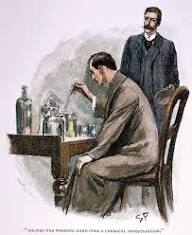
There are so many mystery novels that pair the main detective with a second person whose role is to help the detective with their investigations. The Second might be a friend, an associate, a member of the police department, or maybe even a spouse.
For several years, I lived in a town with a robust textile industry, and residents could purchase items at company stores that sold “seconds.” At the entrance to the store, a posted sign described seconds as items containing a slight flaw compared to the original product. This slight flaw does not affect the product’s ability to perform or its overall quality. Does this same definition apply to the Seconds in mysteries? Do Seconds possess a slight flaw as compared to the detective?
When I take a closer look at Seconds in mysteries, I find several recurring characteristics. First, the person is a staunch defender of their detective. Seconds may occasionally disagree or point out flaws with the person they assist. This information can help the reader understand the detective by learning about their habits and quirks. But this disclosure about the detective’s flaws is reserved for the Second alone. They do not allow others this same liberty of pointing out weaknesses in their detective. And when I say a staunch defender, it goes beyond mere words. They will lay down their own lives in defense of their detective and are often the first to run headfirst into danger.
The next characteristic of a Second is that their own personality is in stark contrast to that of the detective. For instance, Archie Goodwin is the tough guy, interested in dating and fascinated by ladies. In contrast, Nero Wolfe tends to his orchids, shows little interest in women, and solves the crime by sitting at his desk. Hercule Poirot prefers staying indoors and enjoying fine dining, excellent wines, and a good book, while his associate, Arthur Hastings, prefers outdoor sports, fast cars, and good-looking women. If the detective is an opera lover like Morse, then his Sergeant Lewis prefers pop music. If the Second is from the top of society, like Nora Charles, then our detective Nick Charles knows all the best people from society’s underbelly, including the criminal element.
Our Second believes they can solve the crime, but often end up a red herring to the correct solution. They distract us by offering their own theories on who is most likely to have committed the crime. These suggestions often throw the reader off track because those assumptions are often wrong. On the other hand, their theories seem to help the detective focus and eliminate information where logic is the key.
Do Seconds really have flaws, or are their characteristics designed to enhance the image of the detective and the detective’s ability to solve the crime? Plus, where would the detective be without the defense and help of their Second?
What was that? You’re asking–what about Watson? I agree –we can’t talk about Seconds without mentioning Watson from Sherlock Holmes. Since Watson in many ways defined the role of the Second, I’m saving him for his own blog.